What Are China’s Top 10 Smart Workplace Solutions?

China’s workplaces are changing quickly, driven by cloud platforms, artificial intelligence, 5G connectivity, and practical demands for greater efficiency. Smart workplace solutions now connect office access, meeting rooms, lighting, energy systems, employee services, and workplace data within one operating environment. These tools are visible in modern offices, industrial parks, technology campuses, and shared workspaces across major Chinese cities.

This guide examines China’s top 10 smart workplace solutions through practical value, implementation experience, and measurable business outcomes. Examples include facial or mobile access systems, intelligent conference rooms, occupancy sensors, digital visitor management, workplace apps, AI assistants, smart energy controls, and employee wellbeing platforms. A useful solution should reduce wasted space, shorten administrative tasks, improve security, or create a more comfortable daily experience. A screen alone is not innovation.

Real performance varies. A sophisticated platform may fail when employees find it confusing, data integration is weak, or managers ignore privacy responsibilities. That matters. The strongest evaluations therefore consider reliability, user adoption, cybersecurity, accessibility, maintenance, and return on investment. They also distinguish verified capabilities from marketing language. Some rankings remain debatable.

The following overview combines industry practices, technology trends, and practical workplace observations to explain where each solution fits. It also highlights limitations, because no system works equally well for every company. A busy Shanghai office may need flexible desk booking, while a manufacturing campus may prioritize energy monitoring and secure access. Context decides value.
What Are China’s Top 10 Smart Workplace Solutions?

Defining Smart Workplace Solutions in China

What Are China’s Top 10 Smart Workplace Solutions?

Defining Smart Workplace Solutions in China means looking beyond connected devices. A smart workplace links people, spaces, data, and daily operations. In China, the strongest solutions usually cover ten functions: desk booking, room scheduling, access control, occupancy sensing, indoor air monitoring, energy management, visitor services, maintenance requests, hybrid collaboration, and workplace analytics.

The State of the Global Workplace 2024 reported that only 23% of employees were engaged worldwide in 2023.

The 2024 Work Trend Index also found that 68% of workers struggle with work pace and volume.

This figure matters in China’s fast-moving offices. Technology should reduce friction, not create another dashboard. A practical system can guide an employee to a free room, adjust lighting, and report a broken air conditioner within seconds. The 2024 Work Trend Index also found that 68% of workers struggle with work pace and volume. Automation may help, but it cannot repair poor management or unclear responsibilities.

Tips: Start with one building problem. Measure waiting time, energy use, and room utilization before adding tools. Keep employee data limited and transparent. A dashboard can still misread a quiet room. Local work habits also vary sharply between cities and industries. That makes standardization useful, but never complete. The better definition is simple: smart workplace solutions should make Chinese workplaces safer, more efficient, and easier to adapt, while leaving people in control.

The Technologies Powering China’s Smart Workplaces

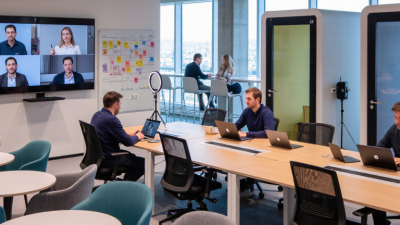
China’s smart workplaces are powered by practical technologies, not science fiction. Artificial intelligence assistants can arrange meetings, answer internal questions, and prepare short reports. Internet of Things sensors track occupancy, temperature, lighting, and air quality. Smart access systems use verified digital identities and reduce manual entry checks. Room booking platforms display live availability on wall panels. Small changes matter.

Cloud collaboration tools connect offices across cities and support shared documents, video meetings, and project tracking. Data analytics helps managers understand space usage and employee movement patterns. Energy management systems adjust lighting and cooling when rooms become empty. Digital twins can simulate office layouts before costly renovations begin. Service robots may deliver documents, guide visitors, or monitor selected facilities. Cybersecurity platforms protect accounts, devices, and sensitive business information through access controls and continuous alerts.

In practice, these systems need careful governance. A sensor can improve comfort, but it may also collect more data than employees expect. Clear notices, limited retention, and human review should guide deployment. Experience shows that reliable infrastructure matters more than impressive demonstrations. If the network fails, a smart door can become an obstacle. Some dashboards remain difficult to use, and employees may ignore overly complex tools. That weakness deserves attention. The best workplace technology supports ordinary tasks quietly, measures real outcomes, and leaves room for human judgment.

What Are China’s Top 10 Smart Workplace Solutions? - The Technologies Powering China’s Smart Workplaces

Rank Smart Workplace Solution Primary Workplace Need Core Technologies Typical Data Inputs Common Applications in China Key Performance Indicators Adoption Maturity
1 AI Meeting and Knowledge Assistants Reduce meeting administration and improve knowledge retrieval Speech recognition, natural-language processing, large language models, automatic summarization Audio, transcripts, calendars, documents, action items Meeting transcription, bilingual minutes, task extraction, internal search and question answering Minutes completion time, search success rate, action-item closure rate, employee usage High
2 Integrated Hybrid Collaboration Platforms Connect office-based, remote and mobile employees Cloud computing, video conferencing, enterprise messaging, document collaboration, identity management User profiles, presence status, files, meetings, workflow records Distributed project work, cross-city operations, remote approvals and virtual training Active users, meeting quality, file-sharing activity, workflow cycle time, service availability High
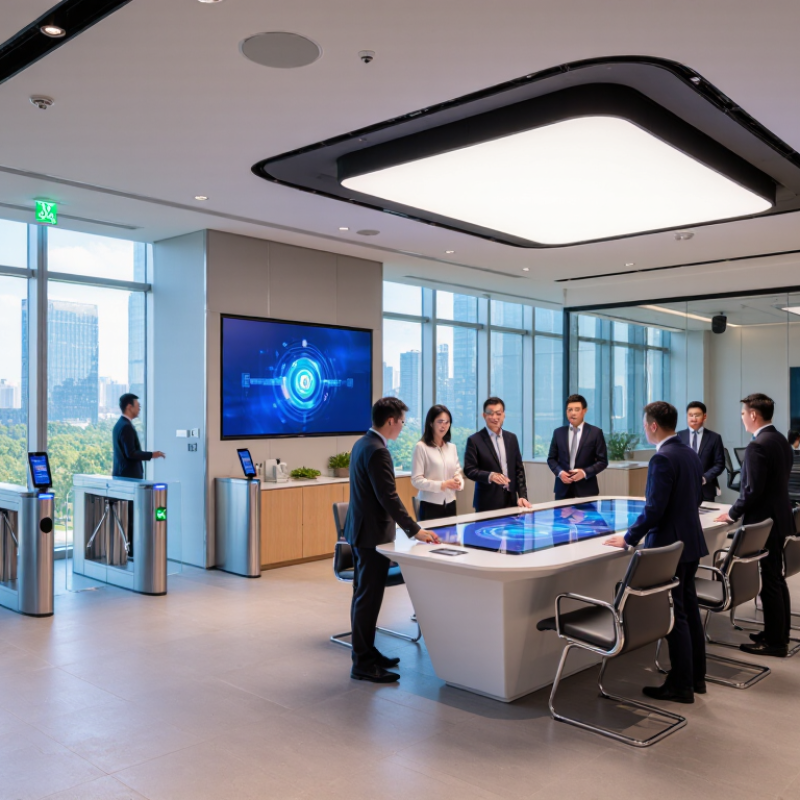
3 Smart Access and Visitor Management Improve security while simplifying workplace entry Mobile credentials, QR codes, biometrics, IoT controllers, video analytics Access events, visitor registrations, identity records, time and location data Office entry, contractor access, reception automation, restricted-area control Entry processing time, unauthorized-access alerts, visitor wait time, audit completeness High
4 Occupancy and Space Utilization Analytics Optimize offices, desks, meeting rooms and floor layouts People-counting sensors, Wi-Fi analytics, computer vision, dashboards, heat maps Occupancy levels, room bookings, desk usage, movement patterns, time stamps Hot-desking, office relocation planning, meeting-room balancing and capacity management Desk utilization, room no-show rate, peak occupancy, space cost per employee Growing
5 IoT-Based Environmental and Indoor Air Management Maintain healthy, comfortable and productive indoor conditions IoT sensors, building automation, HVAC controls, edge computing, predictive alerts Temperature, humidity, carbon dioxide, particulate matter, noise and light levels Office buildings, campuses, laboratories, control rooms and shared workspaces Indoor-air compliance, comfort complaints, HVAC runtime, energy consumption High
6 Digital Twins for Buildings and Campuses Create a real-time operational view of physical workplaces 3D modeling, BIM, GIS, IoT integration, simulation and visualization Floor plans, equipment status, energy data, maintenance records, occupancy information Facility planning, maintenance scheduling, emergency drills and construction coordination Asset visibility, maintenance response time, fault prediction, project coordination time Growing
7 Robotic Process Automation and Intelligent Workflows Automate repetitive administrative and financial processes Software robots, optical character recognition, workflow engines, APIs, machine learning Forms, invoices, approval records, employee data and system transactions Expense claims, procurement, onboarding, payroll support and document processing Processing time, error rate, automation rate, exception rate, transaction cost High
8 Cloud Desktop and Secure Digital Workspace Provide secure access to applications and data from multiple locations Cloud desktops, virtualization, zero-trust access, encryption, endpoint management Login events, device posture, application usage, network activity and access permissions Remote work, temporary offices, outsourced teams and business continuity operations Login success, endpoint compliance, security incidents, support tickets, recovery time High
9 Smart Energy and Carbon Management Lower operating costs and support carbon-reduction targets Smart meters, energy-management systems, AI forecasting, demand control and dashboards Electricity, water, gas, equipment loads, weather and occupancy data Office towers, industrial campuses, data rooms and large public facilities Energy intensity, peak demand, renewable-energy share, carbon emissions and utility cost Growing
10 Smart Workplace Safety and Emergency Response Detect hazards early and coordinate emergency actions Video analytics, IoT alarms, geofencing, digital signage, emergency communication and predictive analytics Alarm signals, equipment conditions, access events, location data and incident reports Fire prevention, restricted-area monitoring, lone-worker protection and evacuation management Incident frequency, alert response time, false-alarm rate, evacuation time and inspection completion Growing

Note: Adoption maturity indicates the relative level of deployment across Chinese enterprise and commercial workplace environments; actual results vary by building type, workforce size, data governance and implementation scope.

China’s Top 10 Smart Workplace Solutions

China’s top 10 smart workplace solutions are reshaping how offices operate. Smart access control uses encrypted credentials and visitor registration to improve security. Desk-booking platforms help hybrid teams find available workstations quickly. Meeting-room scheduling reduces empty rooms and double bookings. Occupancy sensors show how spaces are actually used. This matters.

Digital signage can guide visitors, announce room changes, and display emergency information. Integrated collaboration platforms connect office teams across different cities. AI workplace assistants can answer policy questions and arrange routine tasks. They should support employees, not replace careful human decisions. Clear permissions remain essential when workplace data is collected.

Smart energy management adjusts lighting, cooling, and heating according to occupancy. Indoor air-quality monitoring tracks carbon dioxide, humidity, and fine particles. Workplace analytics combine these signals to identify crowded areas and underused facilities. In practical assessments, simple dashboards often outperform complicated systems. Staff need useful actions, not endless charts. However, sensor readings can be incomplete, and algorithms may misunderstand unusual work patterns. Regular calibration, transparent data rules, and employee feedback make these solutions more reliable. A quiet room may appear unused, yet someone could be concentrating inside. Technology should observe carefully, not assume too much.

How Smart Workplace Systems Improve Business Operations

What Are China’s Top 10 Smart Workplace Solutions?

Smart workplace systems improve daily operations by connecting people, spaces, and data. Common solutions include occupancy sensors, room booking tools, digital signage, visitor management, access control, workflow automation, collaboration platforms, energy management, predictive maintenance, and workforce analytics.

The operational value appears in small moments. A sensor can show that three meeting rooms sit unused every afternoon. Facility teams can then adjust layouts, reduce wasted energy, and release rooms faster. A digital visitor system can shorten reception queues during busy mornings. Automated approvals can also move routine requests without repeated emails.

Data matters most when managers use it carefully. Weekly reports can reveal late equipment repairs, crowded work zones, or rising electricity use. Operations teams should compare system data with employee feedback and on-site observations. Technology alone cannot explain every problem. A quiet meeting room may be reserved for confidential work, not ignored by staff.

The hard lesson is that smart systems need human oversight. Poor sensor placement can produce misleading occupancy figures. Complex interfaces can slow employees instead of helping them. Small pilots, clear privacy rules, and regular maintenance reduce these risks. Teams should test one workflow, measure the result, and revise the setup before expanding it across the workplace.

Key Factors for Evaluating Workplace Solutions in China

What Are China’s Top 10 Smart Workplace Solutions?

Key Factors for Evaluating Workplace Solutions in China

China’s smart workplace market includes room booking, visitor management, occupancy sensors, digital access, energy controls, and employee service platforms. Evaluation should begin with real workplace needs, not attractive demonstrations. In projects I have reviewed, teams often overvalue dashboards and undervalue daily usability. A beautiful interface cannot fix unreliable sensors.

Data governance requires close attention. Check where workplace data is stored, how it is transferred, and who can access it. The solution should support applicable Chinese cybersecurity, privacy, and data management requirements. Request clear retention rules and audit records. Do not accept vague promises. Ask for evidence, testing reports, and documented security procedures.

Integration also matters. The platform should connect with existing access systems, calendars, communication tools, and building controls. Chinese-language support must feel natural, including mobile workflows and local service hours. Test the system during busy periods. Measure booking accuracy, response time, energy savings, and employee adoption. Test it live.

Cost evaluation should include installation, training, maintenance, upgrades, and possible data migration. A low purchase price may create expensive manual work later. Accessibility and emergency procedures deserve practical testing, too. Begin with a limited pilot, collect uncomfortable feedback, and revise the evaluation criteria. No pilot is perfect. That is useful. Improvements often appear after real employees challenge the original assumptions.

What Are China’s Top 10 Smart Workplace Solutions?

Priority index for evaluating smart workplace solutions in China. The index combines business value, employee adoption, integration capability, data security, scalability, and implementation practicality on a 0–100 scale.

The solution categories reflect common enterprise workplace applications, including collaboration, access control, space management, facilities, energy, employee services, and workplace analytics. Scores are a structured evaluation index rather than company or brand market-share data.