Why Sustainable Workplace Design Matters for Global Buyers?

Global buyers are no longer evaluating workplaces by appearance alone. They are examining energy use, employee wellbeing, material sourcing, and long-term operating costs. Sustainable workplace design connects these concerns through measurable choices, from daylighting and low-carbon materials to adaptable furniture and efficient cooling systems.

The stakes are substantial. The United Nations Environment Programme’s 2023 Global Status Report for Buildings and Construction found that buildings consumed 34% of global energy and produced 37% of energy and process-related carbon dioxide emissions in 2022. These figures make offices important purchasing decisions, not decorative projects. A workspace with smart sensors, shaded glazing, and reused materials can reduce waste while creating a more comfortable daily experience. However, technology alone cannot guarantee responsible design.

Carl Elefante, FAIA, former president of the American Institute of Architects, said, “The greenest building is the one that is already built.” His observation supports renovation, reuse, and careful lifecycle analysis before new construction. It also challenges buyers to look beyond attractive sustainability claims. The World Green Building Council promotes similar thinking through its whole-life carbon approach, which considers construction, operation, maintenance, and eventual replacement.

No framework is perfect. Regional climates, budgets, supply chains, and workplace cultures can change the results. A recycled material may still travel thousands of kilometres. A highly efficient office may remain unpleasant if workers lack control over light or temperature. For global buyers, sustainable workplace design therefore requires evidence, local expertise, transparent reporting, and honest measurement. The best decision is rarely the most fashionable one. It is the one that performs reliably over time.
Why Sustainable Workplace Design Matters for Global Buyers?

What Sustainable Workplace Design Means for Global Buyers

Sustainable workplace design means more than recycled furniture or indoor plants. For global buyers, it means evaluating a workplace across its full life cycle: materials, energy, maintenance, adaptability, and end-of-life recovery. The International Energy Agency reports that buildings consume about 30% of global final energy and produce roughly 26% of energy-related emissions. These figures make procurement decisions operational, not decorative.

Buyers should request verified environmental data, such as product life-cycle assessments and Environmental Product Declarations. They should also examine repair access, replacement parts, modular components, and packaging volume. A desk that lasts fifteen years may create less impact than a cheaper desk replaced every five years. Indoor conditions matter too. The World Green Building Council has reported potential productivity gains of 8–11% from improved lighting, ventilation, and thermal comfort. A quiet room, fresh airflow, and adjustable lighting can affect daily performance more than a visually impressive lobby.

Standards help, but they do not remove judgment. Suppliers may present impressive carbon claims without explaining boundaries, transport, or disposal assumptions. Buyers need comparable evidence and independent verification. This takes time. It can also expose uncomfortable trade-offs: imported low-carbon materials may carry significant shipping impacts, while local products may use less efficient manufacturing. The best design is not always the newest one. It is the one that remains useful, repairable, measurable, and suitable for changing work patterns. Mistakes will still happen. Transparent review makes them easier to correct.
How Sustainable Design Influences Workplace Purchasing Decisions

Why Sustainable Workplace Design Matters for Global Buyers?

How Sustainable Design Influences Workplace Purchasing Decisions

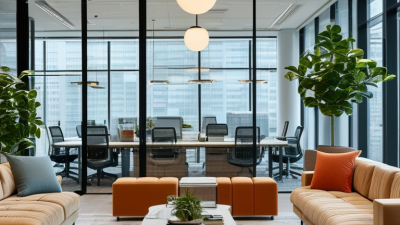
Global buyers increasingly view workplace design as a purchasing decision, not a decorative exercise. In workplace fit-outs, daylight, low-energy lighting, and durable surfaces affect daily performance. A meeting room with poor airflow can undermine an otherwise attractive office. Employees notice quickly.

Procurement teams now ask for measurable evidence. They compare energy models, material declarations, maintenance schedules, and supplier labor practices. Clear documentation reduces uncertainty across different regions. It also helps buyers estimate long-term operating costs. A cheaper chair may become expensive after repeated repairs. A durable floor can reduce replacement waste and disruption.

Practical details matter. Buyers may inspect recycled content, indoor air quality, acoustic performance, and the distance materials travel. They may also request credible certifications and independent testing. Yet sustainable purchasing is not always simple. Our first cost estimate may ignore installation delays or specialist maintenance. We can also overvalue impressive materials while overlooking everyday usability. That requires honest review.

Design choices should match local climate, workplace habits, and available repair services. A solution that works in a temperate office may fail in a humid one. Global purchasing teams need transparent data, realistic lifecycle costs, and suppliers willing to discuss limitations. That openness builds trust more effectively than perfect marketing language.

Why Sustainable Workplace Design Matters for Global Buyers? - How Sustainable Design Influences Workplace Purchasing Decisions

Evidence-based purchasing considerations for sustainable workplace projects

Purchasing Dimension Verified Data Point Why It Influences Buyer Decisions Practical Procurement Requirement Source
Operational Energy Efficiency Buildings account for approximately 30% of global final energy consumption. Energy performance directly affects operating costs, carbon exposure, and long-term asset value. Require energy modelling, efficient lighting, passive design, smart controls, and measurable energy-use targets. International Energy Agency, Buildings
Carbon Reduction The buildings sector produces approximately 26% of global energy-related emissions. Global buyers increasingly evaluate workplace projects against climate targets and emissions-reporting requirements. Request whole-life carbon assessments covering both operational and embodied carbon. International Energy Agency, Buildings
Material Circularity The construction sector consumes about 50% of global extracted materials. Material choices influence resource risk, embodied emissions, waste volumes, and future refurbishment costs. Prioritize recycled, responsibly sourced, durable, repairable, and demountable materials with documented content. United Nations Environment Programme, Building Materials and Climate
Indoor Air Quality Indoor air quality is affected by ventilation, filtration, moisture control, and pollutant sources. Healthier indoor environments reduce perceived workplace risk and support employee comfort and attendance. Specify low-emitting finishes, adequate outdoor-air ventilation, filtration, and post-occupancy air-quality testing. World Health Organization, Roadmap to Improve and Ensure Good Indoor Ventilation
Water Stewardship The building sector is responsible for approximately 12% of global freshwater use. Water-efficient workplaces can lower utility costs and reduce exposure to regional water stress. Include low-flow fixtures, leak monitoring, rainwater strategies, and water-use performance targets. UNEP Global Status Report for Buildings and Construction
Adaptation and Resilience The IPCC identifies increasing risks from heat, flooding, storms, and other climate hazards in many regions. Resilient design helps protect business continuity, employee safety, and workplace investment value. Complete a location-specific climate-risk assessment and specify shading, cooling, drainage, and backup systems where appropriate. IPCC, Sixth Assessment Report: Impacts, Adaptation and Vulnerability
Waste and Fit-Out Flexibility Construction and demolition waste represents a substantial share of total waste streams in many regions. Flexible layouts and reusable components reduce replacement waste during workplace changes. Specify modular partitions, reversible connections, take-back plans, and documented waste-diversion rates. UNEP Global Status Report for Buildings and Construction
Measurement and Transparency Environmental performance can be measured through energy, carbon, water, waste, indoor-air, and lifecycle indicators. Comparable data makes it easier for international buyers to assess suppliers, verify claims, and manage reporting obligations. Require baseline data, reporting frequency, calculation boundaries, verification evidence, and post-occupancy monitoring. Global Reporting Initiative Standards
Buyer takeaway: Sustainable workplace design is increasingly evaluated as a lifecycle investment rather than a purely aesthetic choice. Buyers should compare upfront cost, operating performance, employee wellbeing, resilience, material impacts, and the quality of supporting evidence.

Note: Figures are rounded where the cited source reports approximate values. Definitions, calculation boundaries, and regional conditions should be checked before using the data in a formal procurement or investment decision.

Key Environmental and Social Features in Sustainable Workplaces

Why Sustainable Workplace Design Matters for Global Buyers?

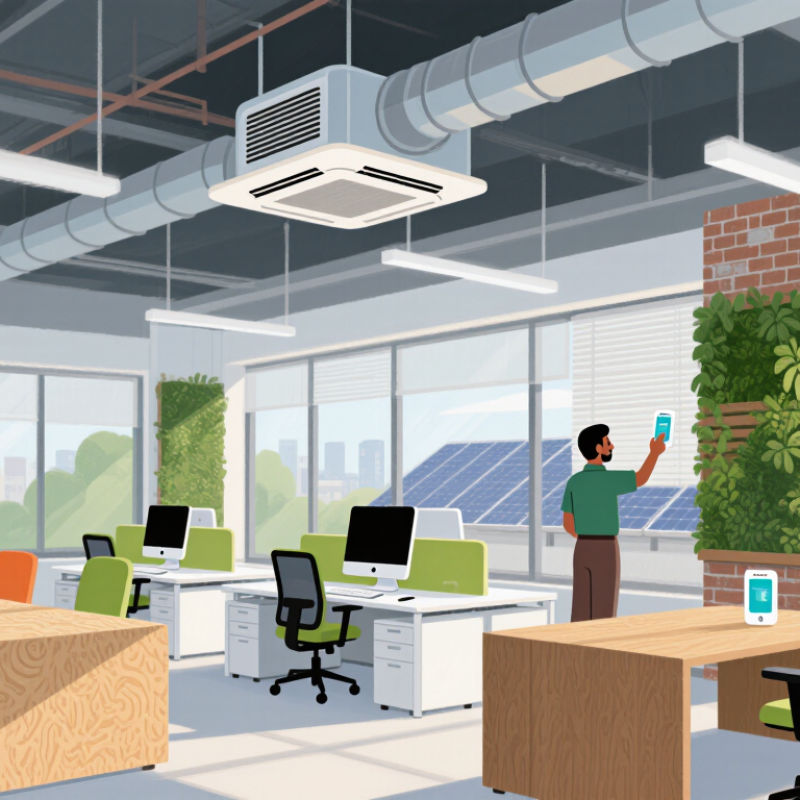
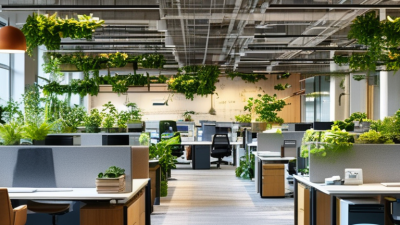
Sustainable workplaces combine environmental performance with everyday human needs. Daylight, external views, and efficient LED lighting can reduce energy demand and improve comfort. Good ventilation matters too, especially in busy meeting rooms. Energy meters help facility teams identify waste instead of guessing. Low-carbon materials, recycled finishes, and durable furniture can reduce replacement costs. Water-saving fixtures and clear recycling stations support responsible daily routines. These details should be measured through utility records, material documents, and regular building checks. A green appearance alone proves very little.

Tips: Ask for energy data, indoor-air records, material declarations, and accessibility evidence. Visit the workplace if possible. Notice glare, noise, heat, and blocked movement. Workers often reveal problems that design drawings miss.

Social features deserve equal attention. Inclusive entrances, adjustable desks, quiet rooms, and accessible washrooms support different bodies and working styles. Safe lighting outside the building can improve confidence during early or late shifts. Ethical procurement also matters, including transparent labor practices and local community considerations. A workplace may use efficient equipment yet still create stress through poor acoustics or rigid layouts. No project gets every detail right. Buyers should record weaknesses, request improvement plans, and review performance after occupation. That honest process is more reliable than a perfect sustainability claim.

Standards, Certifications, and Regulations Buyers Should Evaluate

Sustainable workplace design matters because global buyers must assess more than appearance. A bright office can still waste energy, hide harmful materials, or create expensive compliance risks. During supplier reviews, I look for measurable evidence: energy models, water-use data, material inventories, and maintenance records. Vague claims are not enough.

Buyers should check whether a project follows recognized environmental and energy management standards. Third-party building certifications can support this review, but certificates need current scopes, renewal dates, and verified project addresses. Product-level evidence also matters. Environmental product declarations, recycled-content records, and responsible sourcing documents can reveal what is inside walls, carpets, and furniture. Ask how data was calculated. Some documents look impressive but answer very little.

Regulatory evaluation requires local knowledge. Energy codes, fire safety rules, accessibility requirements, chemical restrictions, waste laws, and carbon-disclosure obligations differ across markets. A design approved in one country may require major changes elsewhere. Request a compliance matrix showing each requirement, responsible party, evidence, and review date. Check whether subcontractors follow the same controls. Gaps often appear there. No scorecard is perfect. I have seen teams overvalue certification points while ignoring glare near workstations or filters replaced too late. Buyers should combine formal standards with site inspections, worker feedback, and realistic operating costs. A small pilot area can expose uncomfortable problems before a global rollout.

Why Sustainable Workplace Design Matters for Global Buyers? — Standards, Certifications, and Regulations Buyers Should Evaluate

Buildings are a major global source of energy demand and emissions. Buyers should evaluate workplace projects against measurable requirements for energy efficiency, carbon reduction, indoor environmental quality, materials, water, and transparent performance reporting.

In 2022, the global buildings sector represented approximately 34% of global energy demand and 37% of global energy- and process-related carbon dioxide emissions. These figures support using recognized environmental management, energy management, building-performance, disclosure, and local building-regulation criteria during supplier and facility selection.

Source: United Nations Environment Programme, 2023 Global Status Report for Buildings and Construction: globalabc.org

How to Assess the Long-Term Value of Sustainable Workplace Design

Why Sustainable Workplace Design Matters for Global Buyers?

How to Assess the Long-Term Value of Sustainable Workplace Design

A sustainable workplace should be judged beyond its opening price. Buyers need a lifecycle view covering energy, water, repairs, flexibility, and replacement costs. A low-cost material may require frequent repairs in a busy corridor. That expense quietly grows over ten years. Request energy models, maintenance records, and realistic occupancy assumptions. Ask who prepared the calculations and how they were checked.

Physical evidence matters. Walk through a completed workplace during a normal working day. Notice glare on screens, uneven temperatures, and noise near meeting rooms. Review indoor air measurements, daylight levels, and cleaning requirements. Independent specialists can verify these findings. Post-occupancy surveys also reveal problems that drawings cannot show. Employees may report tiredness, blocked views, or difficult controls.

The first estimate is rarely perfect. Local weather, utility prices, and working habits can change the result. Test several scenarios instead of trusting one forecast. Compare carbon savings with capital costs and expected service life. Examine whether walls, lighting, and furniture can be adapted without major demolition. Flexible details often protect value when teams expand or work patterns shift. Some sustainable features may look impressive but deliver little benefit when poorly operated. Clear training, accessible controls, and measurable performance are equally important. A careful buyer records both verified strengths and unresolved weaknesses before approving the design.