What Are the Best Smart Workplace Solutions in China?

China’s offices are changing quickly, but a smarter workplace is not simply an office filled with screens. The best smart workplace solutions connect practical tools: meeting-room booking, occupancy sensors, indoor climate controls, visitor management, and energy monitoring. In China, these systems may also need to work across several buildings, local networks, and familiar collaboration platforms such as DingTalk or WeCom. The details matter. A sensor that detects an empty room can help teams understand space use, while a clear booking display can prevent colleagues from searching floor after floor for an available meeting room.

Microsoft CEO Satya Nadella said in 2020, “We’ve seen two years’ worth of digital transformation in two months.” His remark described an extraordinary acceleration, not a guarantee that every digital workplace investment will succeed. That distinction matters. Smart workplace solutions should fit employees’ routines, connect reliably with existing systems, and protect the quality of everyday work. A sleek dashboard is not enough. Sometimes, even a basic room-booking screen confuses people. That is easy to overlook. This guide examines the solutions shaping China’s smart workplaces, from integrated building platforms to targeted tools for comfort, collaboration, and efficiency. It also considers what buyers should check: ease of use, compatibility, support, and measurable results. No single platform suits every company. The right choice depends on the building, the workforce, and the problems that need solving.
What Are the Best Smart Workplace Solutions in China?

Define Smart Workplaces Around China’s 3.38 Million 5G Base Stations (MIIT, 2023)

China’s 3.38 million 5G base stations at the end of 2023 provide a powerful foundation for connected workplaces. The Ministry of Industry and Information Technology (MIIT) reported this national total. But a large network does not automatically mean reliable office coverage. Coverage is not capacity. Concrete walls, basement meeting rooms, and crowded shifts can still weaken signals.

The practical question is how workplace systems use that infrastructure. MIIT reported that 5G applications had reached 71 of China’s 97 major economic categories in 2023. For offices and industrial sites, useful applications include mobile work orders, real-time equipment monitoring, and high-definition video collaboration. Each should solve a defined operational problem. A sensor dashboard that nobody checks is not a smart workplace.

Assess indoor signal quality, device security, and network backup before expanding connected tools. Measure whether staff resolve faults faster or spend less time searching for equipment. These checks matter more than a polished control room. There is an awkward trade-off: more connected devices can create more alerts and maintenance work. Pilot one floor or production line first, then review actual usage. National infrastructure is impressive; local performance still needs proof.
Map Core Solutions: IoT Building Management, Smart Access, and Space Systems

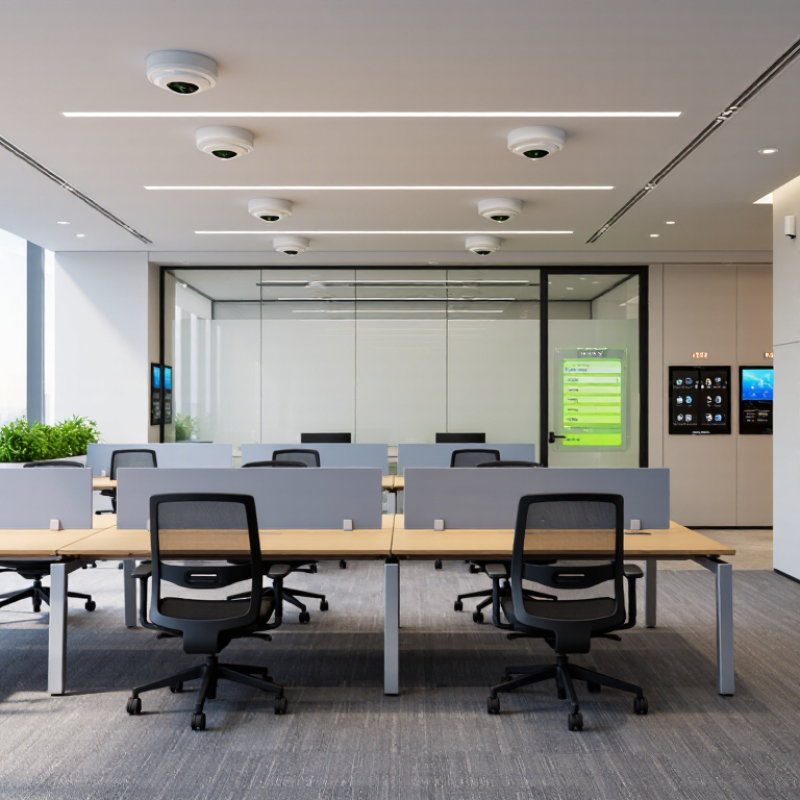
A strong smart workplace in China connects building operations, access, and space use rather than treating them as separate gadgets. IoT building management can combine temperature, air-quality, lighting, and occupancy readings on one dashboard. A facilities team might notice an underused meeting room staying brightly lit after 7 p.m. and adjust its controls. Small changes matter. Yet sensor readings can be noisy, especially in open offices, so teams should compare them with staff feedback before changing schedules.

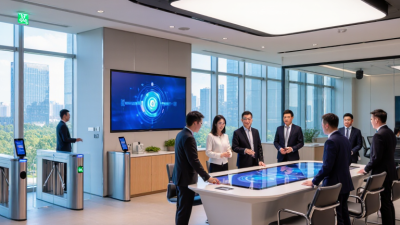
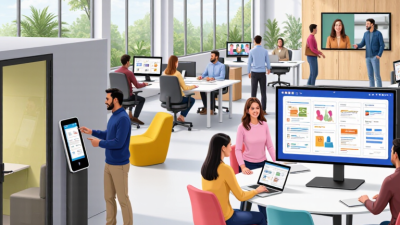
Smart access systems can support employee entry, visitor registration, and permissions that change when roles change. Clear procedures matter as much as the hardware. Staff should know what happens if a reader fails or a credential is misplaced. Space systems can show available desks and meeting rooms, then release unused bookings after a reasonable interval. Useful, but not magic. A polished dashboard cannot fix confusing booking rules. The practical test is whether employees can find a room, enter it, and get comfortable without extra steps. Integration also deserves scrutiny: older building controls may not share data neatly with newer platforms, and rushed connections can create blind spots. Teams should check access logs, sensor coverage, and booking habits regularly, then revise what does not work.

Enable Hybrid Work With China’s 805 Million 5G Users (MIIT, 2023)

China’s 805 million 5G users in 2023 signal a strong foundation for hybrid work, not a guarantee of better work. The Ministry of Industry and Information Technology reported roughly 805 million 5G mobile subscribers and 3.38 million 5G base stations by year-end. For distributed teams, that reach can support clearer video calls, faster access to shared files, and responsive workplace apps. A practical setup links room booking, occupancy sensors, and digital meeting-room displays, so employees can find an available space instead of walking floor to floor.

Connectivity must solve real friction. Microsoft’s 2023 Work Trend Index found that 73% of surveyed employees wanted a better reason to come into the office. That global finding is not China-specific, but it points to a useful design test: make office days worthwhile. Reliable conferencing, one-touch room controls, and shared project boards can help remote and on-site colleagues contribute equally. Keep a fallback for weak indoor signals; a strong national network does not fix every concrete-walled meeting room.

Good systems also respect the limits of measurement. Occupancy data can reveal underused rooms, but tracking too closely may undermine trust. Set clear access rules, collect only necessary data, and review whether tools improve meeting quality—not merely attendance. Small details matter: captions, quiet booths, and stable Wi-Fi can make a hybrid day feel workable. Often, that is the real test.

Address Building Energy: Operations Accounted for 21.7% of China’s Energy Use (CABEE, 2018)

China’s building operations deserve close attention: CABEE reported that they accounted for 21.7% of the country’s energy use in 2018. That figure makes daily controls more than a technical upgrade. It points to a practical opportunity to reduce avoidable consumption while keeping workplaces comfortable.

Smart workplace systems can connect occupancy sensors, lighting controls, HVAC schedules, and electricity meters. For example, a meeting room left empty after lunch should not keep its lights and cooling running at full power. A shared dashboard can help facility teams spot such patterns and compare consumption across floors. Small signals matter. In China, operating needs also differ by climate, building age, and work schedule, so settings should be tested locally rather than copied blindly.

Reliable results require more than installing sensors. Managers need to check meter readings, confirm that equipment responds correctly, and review comfort complaints alongside energy data. A sudden drop in usage may reflect a faulty sensor, not better efficiency. Even well-designed dashboards can overwhelm staff with alerts. Start with a few measurable changes, such as adjusting after-hours cooling, then document what worked and what did not.

What Are the Best Smart Workplace Solutions in China? — Address Building Energy: Operations Accounted for 21.7% of China’s Energy Use (CABEE, 2018)
Solution Area Workplace Function Operational Data to Track How to Evaluate Performance Evidence or Data Basis
Building energy management Combines building-system data in a central view to support monitoring, fault detection, and operational decisions. Electricity and fuel consumption by meter, system, floor, and time period; peak demand; equipment alarms. Compare energy use over consistent periods and report consumption by floor area or operating hours where relevant. China Association of Building Energy Efficiency (CABEE) reported that building operations accounted for 21.7% of China’s energy use in 2018.
Smart HVAC controls Schedules heating, ventilation, and air-conditioning operation and adjusts control settings in response to building conditions. HVAC energy use, operating schedules, indoor temperature, equipment runtime, and fault records. Review HVAC energy use alongside occupancy and indoor-condition data; document comfort and operating-hour changes. Site-level measurements are required; no universal savings figure is asserted here.
Occupancy-aware lighting Uses occupancy detection, scheduling, and daylight-responsive controls to manage lighting in applicable spaces. Lighting energy use, occupancy status, control events, and lighting operating hours. Compare lighting energy and operating hours before and after control changes, using comparable schedules. Results depend on the building, installed controls, space use, and operating schedule.
Space and occupancy analytics Helps workplace teams understand how meeting rooms and other shared spaces are used. Room booking and utilization rates, occupancy patterns, and unused-booking frequency. Calculate utilization as occupied time divided by available time; use the results to inform space planning. Utilization is a site-specific operational measure, not a national benchmark.
Indoor environmental quality monitoring Provides visibility into selected indoor conditions to support facility operations and occupant comfort. Measured temperature, relative humidity, carbon dioxide, and other parameters selected for the site. Review trends against applicable project requirements and operating targets; investigate persistent deviations. Targets should be selected for the building and applicable standards; this table does not prescribe universal thresholds.
Demand and load management Identifies periods of high electricity demand and supports operational adjustments where appropriate. Interval electricity consumption, peak demand, and the timing and duration of controllable loads. Track peak demand and load profiles over comparable periods, while recording any changes to operating conditions. Potential operational effects must be verified using the building’s own meter data and tariff arrangements.

Source: CABEE, 2018 building energy-use research, as cited in the title. The 21.7% figure is the reported national statistic; other indicators above are measurement dimensions for evaluating workplace operations, not claimed national results or guaranteed savings.

Evaluate AI, Cybersecurity, and Workplace KPIs Before Deployment

Smart workplace solutions in China should begin with a specific workplace problem, not a technology showcase. Map delays such as meeting-room conflicts, slow maintenance requests, or crowded reception areas. Then decide whether AI can improve that process. Keep the first use case narrow. For example, an AI assistant might route facilities requests and flag recurring air-conditioning faults. Staff should be able to correct its suggestions, especially when records are incomplete or terminology varies across sites.

Before deployment, test how the system handles access, retention, and data sharing. Review its permissions with IT and security teams, and confirm which employee or visitor details it actually needs. Restrict administrator accounts, encrypt data in transit and at rest, and rehearse account removal when workers leave. A written checklist helps. So does a realistic incident exercise. Requirements can differ by data type and operating context, so obtain qualified local guidance rather than relying on vendor assurances.

Set workplace KPIs before the pilot starts. Track response time, room utilization, unresolved requests, and employee-reported ease of use. Compare results against a baseline, using the same measurement period and site conditions. Avoid treating logins as proof of value. A dashboard may show faster ticket closure while staff quietly reopen issues elsewhere. That is a useful warning, not a reason to hide the metric. Review exceptions with employees, then adjust the workflow before expanding to more offices.

China’s Digital Economy: Context for Smart Workplace Investment

Reported digital-economy scale provides context for workplace modernization; it is not a measure of smart-workplace ROI.

For deployment decisions, assess AI task quality, cybersecurity risk, and workplace KPIs such as time saved and service reliability separately. Source: China Academy of Information and Communications Technology (CAICT), digital economy development reports; values in current yuan.