Top Workplace Experience Trends for Global Businesses
Workplace experience has become a practical business priority for organizations with teams spread across offices, homes, and time zones. It shapes how employees collaborate, find information, use shared spaces, and feel supported during an ordinary workday. Small details count: a reliable video call, a quiet room for focused work, or a clear process for booking a desk. These moments influence whether work feels manageable or needlessly difficult.
Global businesses are responding with more flexible workplace design, better digital tools, and closer attention to employee wellbeing. Hybrid schedules remain part of the picture, but flexibility alone does not guarantee a good experience. A team in Singapore may need different meeting hours from colleagues in London. A new employee may also struggle to build relationships through a screen. These are operational challenges, not just cultural talking points.
The most useful workplace experience trends connect employee needs with business realities. Organizations are rethinking office layouts, improving collaboration platforms, and using feedback to spot recurring friction. Some are also exploring AI-enabled tools, while weighing accuracy, transparency, and data protection. That balance matters. A polished app cannot fix unclear expectations or poor management. Nor will a redesigned office help if employees lack a reason to visit. The picture is uneven, and there is no universal template. This overview examines the changes global businesses are making, the benefits they seek, and the questions leaders should ask before adopting the next big idea.
Defining Workplace Experience in Global Businesses
Defining workplace experience in global businesses means looking beyond office design.
It is the combined effect of people, spaces, technology, and everyday processes on how work feels and gets done. A reliable definition should include office, remote, and hybrid work—not just headquarters. It also considers practical details: booking a meeting room, finding a quiet desk, or getting timely help with a broken access card.
The experience is not identical everywhere. Local work habits, language, time zones, accessibility needs, and office layouts shape what employees need. A video meeting that works well for one team may fall outside another team’s normal hours. Global consistency matters, but identical rules can create friction. Small details matter.
Tips: Ask employees about specific moments, not vague satisfaction. Compare feedback by location and work pattern. Check whether policies match daily reality, then adjust them with local teams.
Useful measures can include room-booking issues, response times for workplace requests, and employee feedback about focus or belonging. These indicators need context; a low survey score may point to workload, not the office itself. Review patterns over time and speak with employees before making changes. A neat framework can still miss something important. Workplace experience is partly measurable, but it is also personal, and organizations should be willing to revise their assumptions.
Forces Driving Change in Global Workplaces
Global workplaces are changing because work no longer happens in one place, on one schedule, or within one culture. Hybrid teams need offices that support purposeful collaboration, not rows of mostly empty desks. At 10 a.m., a video call may fill one room while a quiet corner remains essential for focused work. Rising energy costs and climate concerns also push companies to rethink lighting, heating, and space use. Technology adds speed, but poorly planned systems can create more alerts than clarity.
Employee expectations are shifting too. People notice whether meeting rooms are accessible, whether local teams have a voice, and whether a workspace feels comfortable across different seasons and working styles. Global consistency helps, yet identical layouts rarely fit every city. A small office near public transit may need flexible desks; a larger campus may need clearer routes between shared spaces. Leaders should compare occupancy patterns, employee feedback, and operational costs before making changes. Still, surveys can miss quiet frustrations. That matters.
Tips: Test one change at a time. Track room bookings alongside short employee interviews. Check lighting and noise at different hours, not only during a site visit. Share what changed and what remains uncertain. A pilot may look successful on paper while making someone’s daily routine harder.
Emerging Trends in Workplace Experience
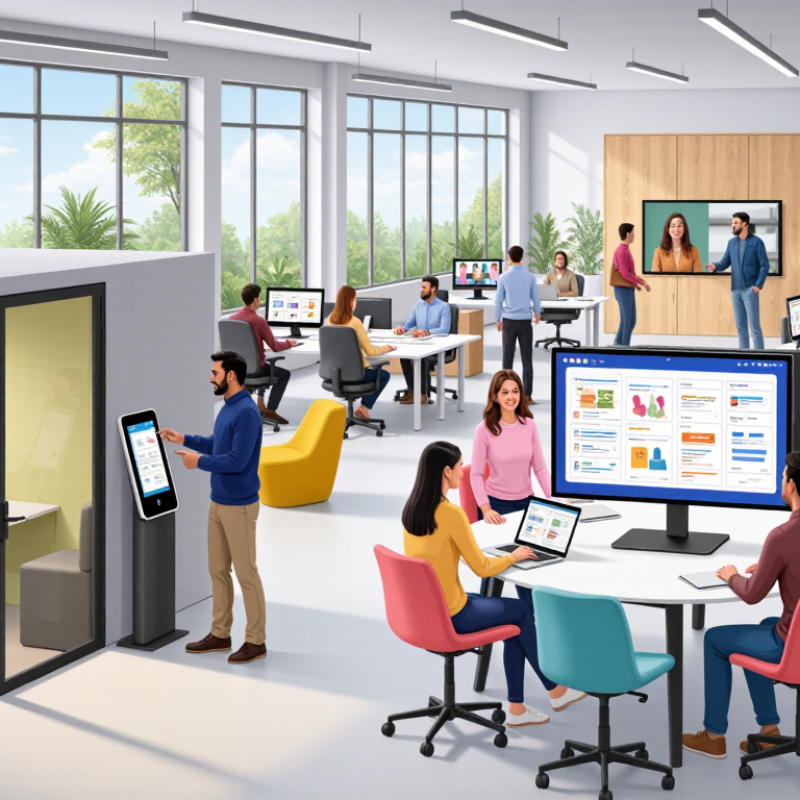
Emerging workplace experience trends are shifting attention from office design alone to how work feels throughout the day. Hybrid schedules make clear communication essential: employees need to know which spaces support focused tasks, private calls, or team discussion. A quiet room with reliable lighting and a door that closes can matter more than a dramatic lobby. Small details count.
Workplaces are also becoming more responsive to individual needs. Adjustable desks, varied seating, and clear wayfinding help people choose a setting that suits their task or comfort. Digital booking tools can reduce the scramble for meeting rooms, but they should remain simple and accessible. Technology is useful when it removes friction, not when it adds another process. Some workplaces may adopt these ideas unevenly; that is worth examining, rather than pretending every change works for everyone. Regular staff feedback and basic space-use reviews can reveal what is helping and what is not.
Tips: Ask employees where their work gets interrupted. Test one change, such as adding a quiet zone, then review feedback after a few weeks. Keep options flexible. A perfect layout is unlikely.
Adapting Workplace Strategies Across Regions and Cultures
Global workplace experience depends on more than a shared office design. Teams in different regions may value quiet focus areas, lively collaboration, or flexibility around family routines. A single global policy can create consistency, but it can also miss local needs. For example, a meeting schedule that works for one time zone may regularly inconvenience another. Ask employees how they use their spaces, then compare feedback across locations before changing layouts or routines.
Culture shapes how people speak up, share feedback, and use communal areas. In some offices, open discussion feels natural; elsewhere, employees may prefer smaller conversations or time to prepare. Managers should avoid treating one response as representative of an entire culture. That is easy to get wrong. Combine short surveys with local listening sessions, and review participation by role and location. Adjusting every detail is not practical, but explaining what can and cannot change builds trust.
Tips: Set a few shared principles, such as comfort and accessibility, while letting local teams adapt the details. Test changes with a small group first. Check whether quieter employees are being heard, not only those who speak quickly. Revisit the plan after a few weeks; the first version may need work.
Measuring and Improving the Global Employee Experience
Global employee experience is not a single score. A quiet office in Singapore, a crowded hub in London, and a home workspace in Nairobi can create different needs. Measure what people encounter each week: finding a desk, joining a video call, getting help, and taking breaks. Small details matter.
Combine short pulse surveys with practical signals, such as room availability, support response times, and attendance patterns. Compare results by location, role, and work arrangement, but do not treat groups as interchangeable. A low survey score may reflect unclear questions, survey fatigue, or a recent change—not just poor facilities. Check the context. Protect privacy by reporting grouped results and explaining who can access them.
Improvement works best when local teams can test practical changes. If employees report noisy calls, try reservable quiet rooms or clearer meeting norms, then ask whether the change helped. Share what changed and what did not; silence can weaken trust. One uncomfortable lesson: dashboards make comparison easy, but they cannot explain every experience. Use metrics to start conversations, not to rank offices.
Top Workplace Experience Trends for Global Businesses - Measuring and Improving the Global Employee Experience
| Workplace Experience Dimension |
Global Evidence |
What It May Signal |
Practical Measurement and Improvement |
| Employee engagement |
21% of employees worldwide were estimated to be engaged at work in 2023. |
Engagement remains a major opportunity for organizations seeking stronger connection, motivation, and contribution. |
Track engagement and intent to stay by region and role. Pair survey results with regular manager check-ins and visible follow-up actions. |
| Work-related stress |
41% of employees worldwide reported experiencing a lot of stress during the previous day in 2023. |
High stress can point to workload, uncertainty, limited support, or insufficient recovery time; experiences may differ across locations and teams. |
Use brief, confidential pulse surveys alongside workload and absence indicators. Review staffing, priorities, and access to support with local teams. |
| Mental health and sustainable work |
Depression and anxiety are estimated to result in 12 billion lost working days globally each year. |
Mental health is connected to both employee wellbeing and the design of work, including demands, flexibility, and access to help. |
Assess psychosocial risks, promote early access to appropriate support, and monitor wellbeing indicators while protecting employee privacy. |
| Productivity impact of mental health |
Depression and anxiety are estimated to cost the global economy about US$1 trillion per year in lost productivity. |
Wellbeing initiatives are most effective when combined with practical changes to working conditions rather than treated as a standalone benefit. |
Evaluate programs using access, awareness, and employee feedback measures. Compare trends over time and adapt support to local needs. |
Data notes: Engagement and previous-day stress figures refer to global employee estimates for 2023, published in 2024. Mental-health figures are international estimates concerning depression and anxiety. Measures use different methods and periods and should not be treated as directly comparable or as a substitute for local workforce data.