10 Best Inspiring Work Environments for Global Businesses
The best inspiring work environments do more than look impressive in photographs. They help people focus, exchange ideas, and feel respected during ordinary working days. A quiet room, natural daylight, reliable technology, and a comfortable chair can influence productivity more than expensive decoration. Small details matter.
Global businesses face a more complex challenge. Their teams may work across time zones, cultures, languages, and accessibility needs. An office designed for one city may fail in another. Effective leaders therefore combine workplace research with direct employee feedback. They observe how people use meeting rooms, shared desks, breakout areas, and remote collaboration tools. They also review practical measures, including retention, wellbeing surveys, collaboration quality, and workspace usage.
There is no perfect model.
This guide explores ten inspiring work environments that offer useful lessons for international organizations. Some emphasize biophilic design, with plants, daylight, and outdoor access. Others prioritize flexible work zones, quiet concentration areas, or inclusive facilities. Their success depends on more than appearance. Management behavior, fair policies, safety standards, and genuine trust shape the daily experience.
These examples should not be copied without reflection. A flexible office may support creativity for one team but create distraction for another. Open spaces can encourage conversation, yet they may reduce privacy. Local employees should help adapt every idea. The strongest global workplaces remain practical, measurable, and human. They make room for ambition, but they also acknowledge fatigue, cultural differences, and imperfect implementation.
Defining Inspiring Work Environments for Global Businesses
An inspiring work environment begins with clarity, trust, and room for different working styles. For global businesses, one office design cannot serve every culture. Employees may value open discussion, quiet focus, or formal decision-making. Effective workplaces make these differences visible without creating divisions. Clear policies should explain communication standards, meeting etiquette, and decision ownership. This reduces confusion across time zones.
Practical details shape daily experience. A well-planned office offers quiet rooms, shared tables, reliable technology, and accessible facilities. Remote employees need equal access to information and meaningful conversations. Managers should rotate meeting times fairly, rather than placing the burden on one region. Small choices matter. A written agenda can prevent a thirty-minute meeting from becoming an hour. Regular feedback also reveals whether workplace policies work beyond headquarters.
Psychological safety remains essential. Employees should be able to question an idea without fearing punishment or exclusion. Leaders can build this trust by admitting mistakes, documenting decisions, and responding consistently. Evidence from organizational research links autonomy, recognition, and supportive management with stronger engagement. Yet no environment is perfect. An office may offer collaboration areas but still overwhelm employees with noise. A flexible policy may exist but feel unsafe to use. Global businesses must test their practices, listen to local teams, and adjust them when real experiences expose gaps.
Criteria for Evaluating International Workplace Models
10 Best Inspiring Work Environments for Global Businesses
Evaluating international workplace models requires more than attractive offices or flexible schedules. Strong environments support productivity across time zones, cultures, and legal expectations. Measure communication clarity, psychological safety, and decision fairness. A quiet room, reliable video access, and written meeting notes reveal more than a glossy headquarters. Experience matters. Interview employees in different regions, not only senior managers. Their daily details expose gaps between policy and practice.
Tips: Score each model against consistent criteria, including inclusion, accessibility, leadership trust, workload, learning, and data protection. Test the model for one quarter with teams in at least two countries. Track response times, retention signals, meeting fatigue, and participation levels. Ask local leaders to explain unexpected results. Numbers help, but they can hide silence. Review findings with independent workplace specialists when possible. Do not assume one successful office model transfers neatly elsewhere.
An inspiring environment should make collaboration easier without erasing local habits. Compare hub offices, hybrid teams, remote-first groups, project studios, and employee-led spaces through the same lens. Check whether a parent can join a meeting, whether a new hire understands decisions, and whether a contractor receives proper support. Small failures are useful evidence. Perhaps our scoring rewards visible enthusiasm too heavily. Revisit the criteria after real use, especially when workers report isolation, unequal access, or unclear career paths. A model earns credibility through consistent results, transparent adjustments, and documented employee experience.
Ten Inspiring Work Environments Around the World
Ten Inspiring Work Environments Around the World
Great workplaces reflect local habits, climate, and community needs. They also support focused work, honest communication, and reasonable flexibility. During workplace visits, I have noticed that thoughtful details often matter more than expensive design.
In Copenhagen, daylight, bicycles, and shared tables encourage balanced routines. Tokyo offices often use quiet zones for concentrated tasks. Singapore workplaces commonly blend technology with compact, efficient layouts. Melbourne studios may include plants, natural materials, and informal meeting corners. In Nairobi, shaded outdoor spaces can support collaboration and fresh thinking. Helsinki environments value calm rooms, clear schedules, and comfortable lighting. São Paulo teams often use colorful social areas to strengthen connection. Dubai offices may combine private focus rooms with adaptable meeting spaces. Vancouver workplaces frequently connect indoor areas with nearby nature. In Seoul, flexible technology zones can help teams move quickly between discussion and execution.
Tips: Observe how people actually work before changing the space. Provide quiet areas, adjustable seating, and reliable internet. Ask employees what feels useful, not merely attractive. Small improvements can include better acoustics, softer lighting, or a shared whiteboard. Safety and accessibility must guide every decision. Culture should not become decoration.
No environment works perfectly. Open layouts can create noise, while private rooms may reduce spontaneous exchange. Remote teams also need care, because digital comfort can hide isolation. Measure results through participation, retention, focus, and employee feedback. Review the design regularly. Make room for correction.
How Workplace Design Supports Culture and Innovation
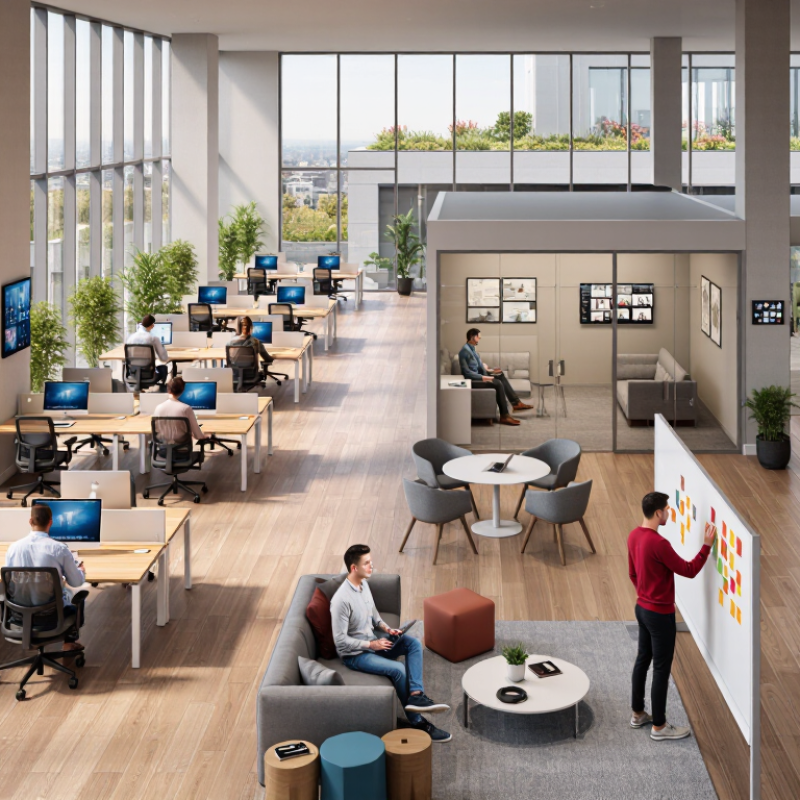
For global businesses, workplace design is more than attractive furniture. It is a daily signal of what an organization values. In my experience advising distributed teams, open areas can encourage quick exchanges, but they can also exhaust people. A thoughtful environment offers choice: quiet rooms for focused work, shared tables for collaboration, and informal corners for unplanned conversation. These details make culture visible. Employees learn whether trust is real by noticing how much control they have over their surroundings. Small choices matter. A local team may need cultural privacy, while another may prefer lively group spaces.
Innovation needs movement, not constant noise. Design teams can place writable walls near project zones, prototype tables beside material storage, and flexible seats near natural light. Such arrangements reduce friction between an idea and its first test. Global offices also benefit from consistent principles rather than identical layouts. Shared standards for accessibility, acoustics, safety, and digital connection create belonging across locations. Yet local adaptation remains essential. Climate, working customs, and commuting patterns should shape the final plan. Copying one office everywhere rarely works.
Reliable decisions come from observation, employee interviews, and post-occupancy measures. Track meeting-room use, focus-time complaints, collaboration patterns, and staff retention. Numbers help, but they do not explain every silence. I once saw a beautiful lounge remain empty because its lighting felt harsh after lunch. That mistake was useful. It showed that design needs testing, not confidence alone. Leaders should review spaces with employees, revise weak areas, and accept that culture changes faster than furniture. A workplace can support innovation without performing it. Sometimes, the best evidence is a team staying longer to solve a difficult problem together.
10 Best Inspiring Work Environments for Global Businesses
How Workplace Design Supports Culture and Innovation
A strong workplace strategy should create spaces that support connection, autonomy, focus, learning, and experimentation. These priorities are especially important because only 23% of employees worldwide were engaged at work in 2023, while 62% were not engaged.
Data source: Gallup, State of the Global Workplace 2024. The chart presents global employee engagement results as a design context for building more inspiring and innovative work environments.
Implementing a Global Work Environment Across Diverse Markets
A global work environment cannot be copied from one headquarters to every market. It must be adapted locally.
The 2024 State of the Global Workplace report recorded only 23% of employees as engaged worldwide. That figure shows why policies alone are not enough.
Start with a shared framework, then allow local teams to shape daily practices. A common framework might define respectful communication, transparent promotion, and psychological safety. Local teams can adjust meeting times, holidays, language, and workspace design. In one office, this may mean quiet rooms and flexible prayer breaks. In another, it may require reliable transport support and earlier shifts. Small details matter.
The Future of Jobs Report 2023 estimated that 44% of workers’ skills could be disrupted by 2027. It also found that many employees will need retraining. Companies should create market-specific learning plans, using short workshops, translated materials, and paid practice time. Managers need training too. They often approve policies but overlook cultural signals, such as who speaks first in meetings. Our first rollout may still feel too standardized. That is useful feedback. A quarterly listening session, anonymous pulse survey, and local employee panel can reveal what metrics miss.